

 Send Inquiry
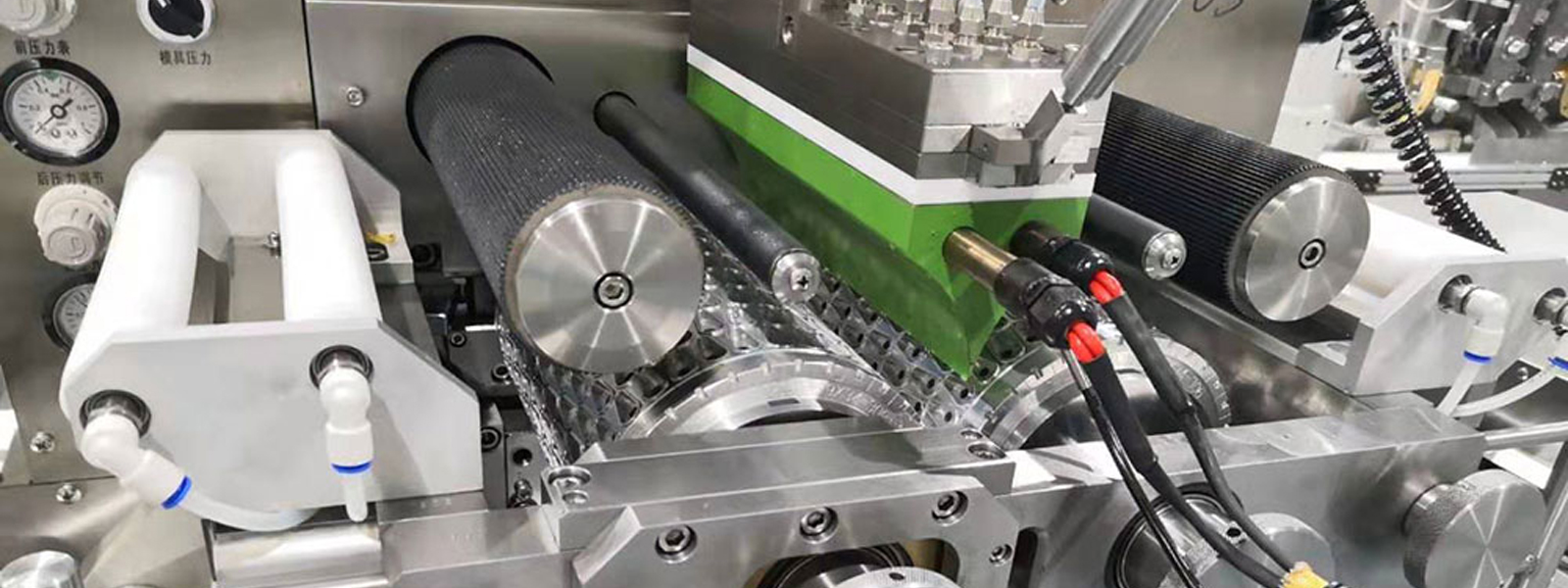
R&D Softgel Encapsulation Machine
Price 150000.0 INR/ Piece
MOQ : 1 Piece
R&D Softgel Encapsulation Machine Specification
- Phase
- Single / Three Phase
- Frequency
- 50/60 Hz
- Noise Level
- <75 dB
- Features
- Compact design, easy cleaning, cGMP compliant, precision control, modular components
- Usage & Applications
- R&D and pilot production of softgel capsules for pharmaceutical, nutraceutical, and cosmetic industries
- Temperature
- Ambient to 65C (controlled)
- Type
- R&D Softgel Encapsulation Machine
- Material
- Stainless Steel
- Capacity
- Max. 1-3 rpm (rolls per min), up to 5000 Softgels/hour
- Computerized
- Yes
- Control Mode
- PLC Touch Screen Control
- Voltage
- 220V / 380V
- Power
- 3 kW
- Weight (kg)
- Approx. 750 kg
- Dimension (L*W*H)
- 1500 mm x 600 mm x 1700 mm
- Color
- Stainless Steel / Silver Finish
- Compressed Air Required
- 6 Bar
- Dripping System
- Precision, adjustable
- Gelatin Tank Capacity
- 20 Liters
- Cooling Drum
- Chilled water/air cooled, stainless steel construction
- Compliance
- Meets international regulatory standards (GMP/CE)
- Gelatin Spreader
- Integrated with temperature control
- Product Hopper Volume
- 1 Liter
- Lubrication System
- Automatic
- Safety Features
- Emergency stop, overload protection
- Die Roll Speed
- 1-3 rpm, variable
- Changeover Time
- Quick change tooling, less than 30 min
- Roll Diameter
- 80 mm
- Power Supply
- AC
- Main Drive
- Servo Motor
About R&D Softgel Encapsulation Machine
- Rotary speed of die roll: 3rpm
- Capacity: about 5000 TO 10,000 capsule/hour
- Production rate normal 3.0-4.0 rpm
- Plungers quantity: 6 plungers
- Power source :380v x50hz/60hz x3phase AC
- Main motor: 1.5HP
- Overall size: 935x1160x2040 mm
- Weight: 1000kg Approx.
Exceptional Production Efficiency
The R&D stands out with its ability to produce up to 10000 softgel capsules per hour, meeting high-volume industrial demands. Its 2-section tumbler dryer and efficient rotary mould speed of 3 R.P.M. support continuous, large-scale manufacturing while maintaining product consistency and integrity, ideal for intensive pharmaceutical and nutraceutical operations.
Precision Engineering and User-Friendly Controls
Designed using durable stainless steel and featuring advanced PLC control with a touch screen interface, the R&D delivers both reliability and operational simplicity. The computerized system allows for precise adjustment of shell thickness, die size, and humidity, ensuring optimal conditions for diverse capsule sizes and shells.
Versatile Application Across Industries
Specifically tailored for pharmaceutical, nutraceutical, and food sectors, the R&D can encapsulate a broad range of formulations. With its adaptable design, it supports various capsule sizes (Oblong 2-20) and shell thicknesses (0.6-1.5 mm), providing flexibility for different production requirements.
FAQ's of R&D Softgel Encapsulation Machine:
Q: How does the R&D ensure accurate and consistent softgel production?
A: The R&D utilizes a precision-engineered roller die system, PLC control, and touch screen interface to consistently regulate capsule size, shell thickness, and production speed. This combination ensures each capsule meets stringent quality standards with minimal human intervention.Q: What types of industries and applications is the R&D suitable for?
A: The R&D is ideal for pharmaceutical, nutraceutical, and food industries. It supports the production of various softgel capsules for medicinal, dietary supplement, and food product applications, making it a versatile asset for manufacturers in these sectors.Q: When should cooling water and compressed air be supplied to the machine?
A: Cooling water (200 L/h) and compressed air (0.6-0.8 MPa) should be continuously supplied during operations to maintain optimal temperature and consistent gel encapsulation. This setup helps prevent overheating and ensures the capsules are formed correctly.Q: Where is the R&D Softgel Encapsulation Machine typically installed?
A: This machine is commonly installed in dedicated clean rooms or production areas within manufacturing facilities that adhere to pharmaceutical or food industry standards, ensuring proper hygiene and compliance with regulatory requirements.Q: What is the process for operating the R&D, and how many operators are required?
A: One or two trained operators are sufficient to run the SP-600. They oversee machine setup, monitor parameters via the touch screen PLC system, load raw materials, and inspect finished capsules. The automation and easy operation minimize manual effort.Q: How does the machine benefit production efficiency and product quality?
A: The high output (up to 100,000 capsules/hour), automated controls, and inbuilt dryer sections enhance operational efficiency while consistently delivering precise, high-quality softgel capsules, reducing wastage and manual errors.Easy Operation & Advanced Control
This R&D softgel encapsulation machine is managed through a user-friendly PLC touch screen interface, providing precise control over key parameters like die roll speed (1-3 rpm) and temperature (ambient to 65C). The servo-driven main drive ensures consistent, repeatable results for research and pilot production.
Designed for Quality and Compliance
Manufactured from robust stainless steel, the machine meets GMP and CE standards, ensuring both safety and high-quality output. Features such as automatic lubrication, emergency stop, and overload protection deliver seamless, compliant operation for sensitive applications.
Flexible, Fast, and Efficient
Supporting up to 5,000 softgels per hour with a quick-change tooling system, this machine is perfect for R&D environments requiring frequent product changeovers. Its modular components, compact footprint, and quiet operation (<75 dB) make it ideal for laboratory and pilot-scale use.
FAQ's of R&D Softgel Encapsulation Machine:
Q: How does the R&D Softgel Encapsulation Machine facilitate quick product changeovers?
A: The machine features a modular tooling system that enables changeover in less than 30 minutes, allowing researchers to efficiently switch between products with minimal downtime. This flexibility is essential for R&D environments where multiple formulations must be tested rapidly.Q: What types of applications is this encapsulation machine suitable for?
A: Designed for research and pilot production, the machine is ideal for producing softgel capsules in pharmaceutical, nutraceutical, and cosmetic sectors. Its precision control and compliance with international standards ensure suitability for high-quality sample and small-scale batch manufacturing.Q: Where should the machine be installed for optimal operation?
A: For best performance, install the machine in a clean, controlled R&D lab or pilot production area with access to a consistent power supply (220V/380V, 3kW), chilled water/air lines for cooling, and a compressed air source at 6 bar, all while maintaining environmental conditions up to 65C.Q: What benefits does the automatic lubrication system provide?
A: The automatic lubrication system ensures all critical moving components are properly lubricated, reducing wear and tear, minimizing maintenance needs, and consistently supporting reliable operation during extended research or batch runs.Q: How is the gelatin spreader controlled and why is this important?
A: The integrated gelatin spreader includes temperature control up to 65C, essential for maintaining optimal gelatin viscosity and uniform spreading. This ensures accurate dosing and consistent capsule formation, critical for reproducible R&D production results.Q: What safety features are built into the machine?
A: Safety is ensured through emergency stop buttons, overload protection, and compliance with GMP/CE standards. These features help protect operators and prevent equipment damage during both setup and operation.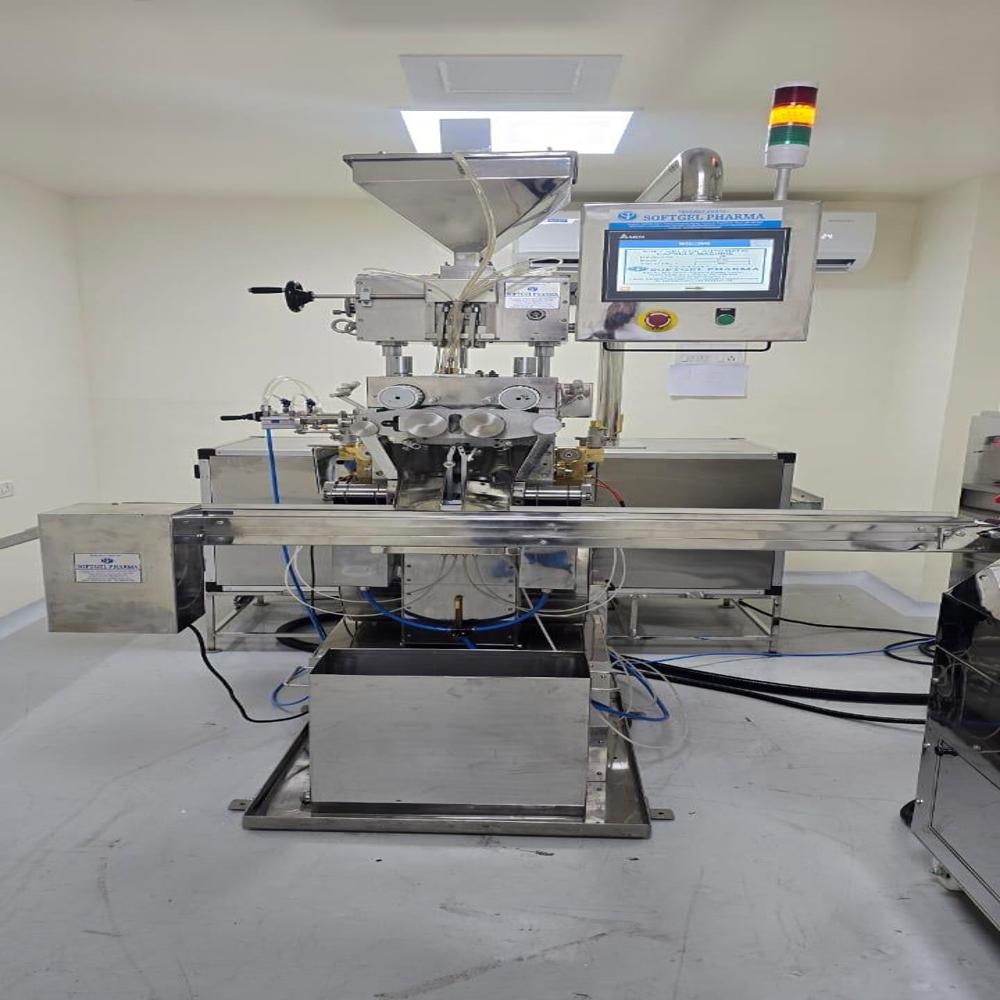
Tell us about your requirement

Price:
Quantity
Select Unit
- 50
- 100
- 200
- 250
- 500
- 1000+
Additional detail
Mobile number
Email

More Products in Encapsulation Machine Category
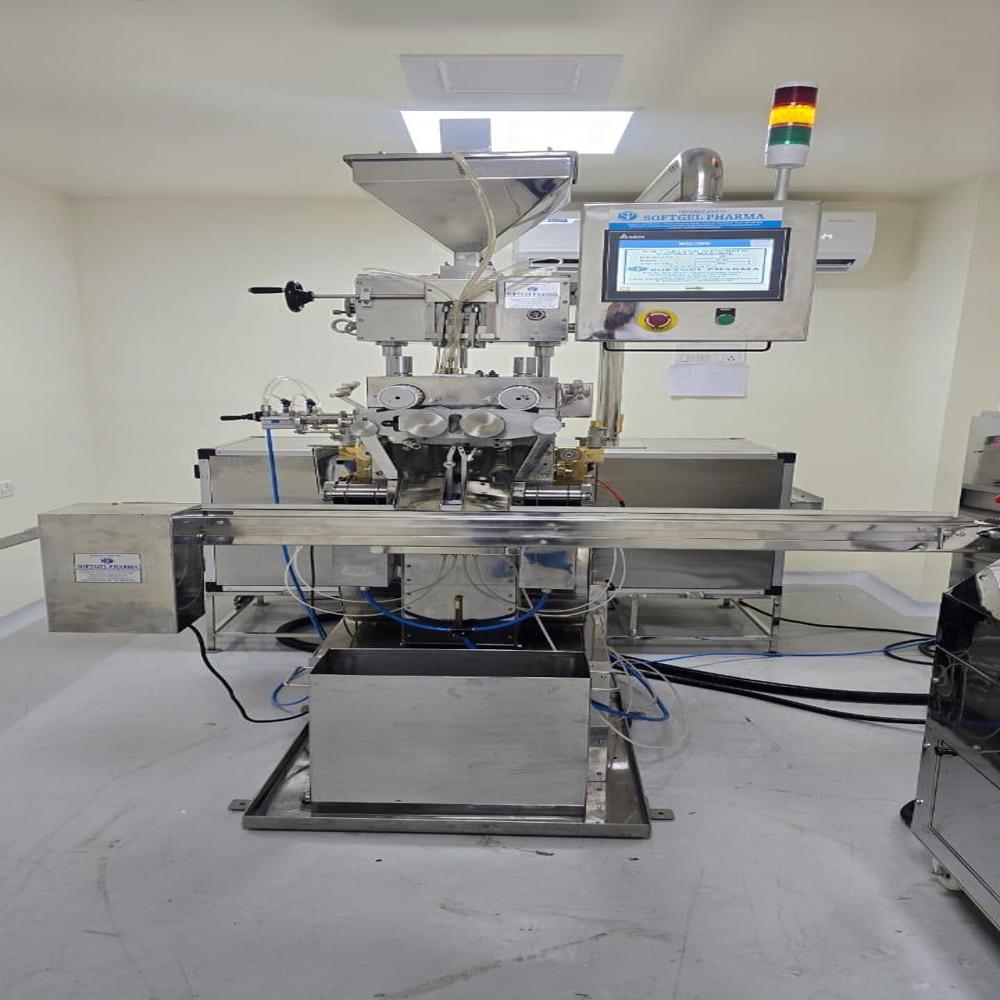
SP-800 Softgel Encapsulation Machine
Price 100000.0 INR / Piece
Minimum Order Quantity : 1 Piece
Dimension (L*W*H) : 2100 mm 1200 mm 2100 mm APROXX Meter (m)
Power : 15 kW Statampere (sA)
Color : Silver
Usage & Applications : Pharmaceutical, Nutraceutical, and Food Industry for Softgel Capsule Production
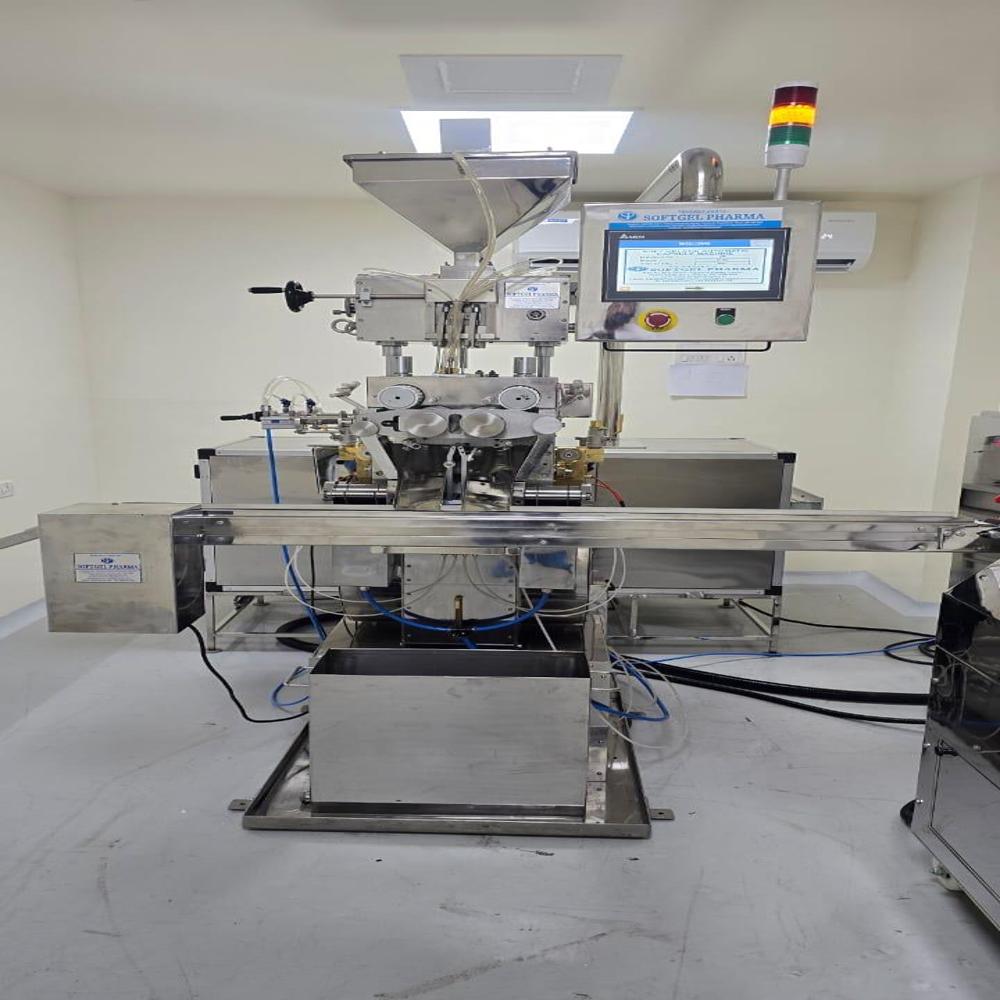
SP-600 Softgel Encapsulation Machine
Price 100000.0 INR / Piece
Minimum Order Quantity : 1 Piece
Dimension (L*W*H) : 2150 mm x 900 mm x 1850 mm Millimeter (mm)
Power : 13 kW Watt (w)
Color : Silver/Metallic
Usage & Applications : Production of Softgel Capsules for Pharmaceuticals, Health Supplements, Food, and Cosmetics

SOFTGEL PHARMA
GST : 27ACKFS0130K1Z4

Mr. Shailesh Saldanha
(Partner)
Mobile : 07971258206

 Send Inquiry
Quick Link

Developed and Managed by Infocom Network Private Limited.
